
Tattoo Looks Wrinkly? How Long It Lasts and What to Do
Quick Summary
Here are the key points about a wrinkly tattoo.
- What it is: A wrinkly tattoo looks creased, crinkly, or shiny instead of smooth. Most of the time it is the thin new skin that forms after peeling, not a ruined tattoo.
- Most common cause: The onion-skin (or silver-skin) stage, roughly two to three weeks in, once peeling has finished.
- Two opposite problems: Too much moisture makes healing skin soft and soggy. Too little makes it tight and flaky. They look similar and need opposite fixes.
- Bali factor: Humidity, sweat, and sea water push healing skin toward soggy. Aircon and midday sun push it toward dry. The right fix depends on which one you have.
- When to worry: Wrinkling with wet lifting scabs, raised hard ridges, or spreading redness and heat is worth getting checked rather than waiting out.
A tattoo looks wrinkly because the new layer of skin growing over it has not finished rebuilding. During healing, your body forms a fresh outer layer across the tattooed area, but this new skin is still thin, soft, and settling into the tissue underneath. It can crease when you move, stretch, or press the area. In most cases, that wrinkled texture is part of the healing surface, not damage to the ink.
This is often called the onion-skin or silver-skin stage. Think of it like wallpaper before the glue has fully set: the paper is on the wall, but it can still ripple with the slightest movement. A healing tattoo can behave the same way, especially around the second week. The important part is knowing which changes are normal, which are warning signs, and how long the wrinkled texture can last in a hot, humid climate like Bali.
Is a wrinkly tattoo normal?
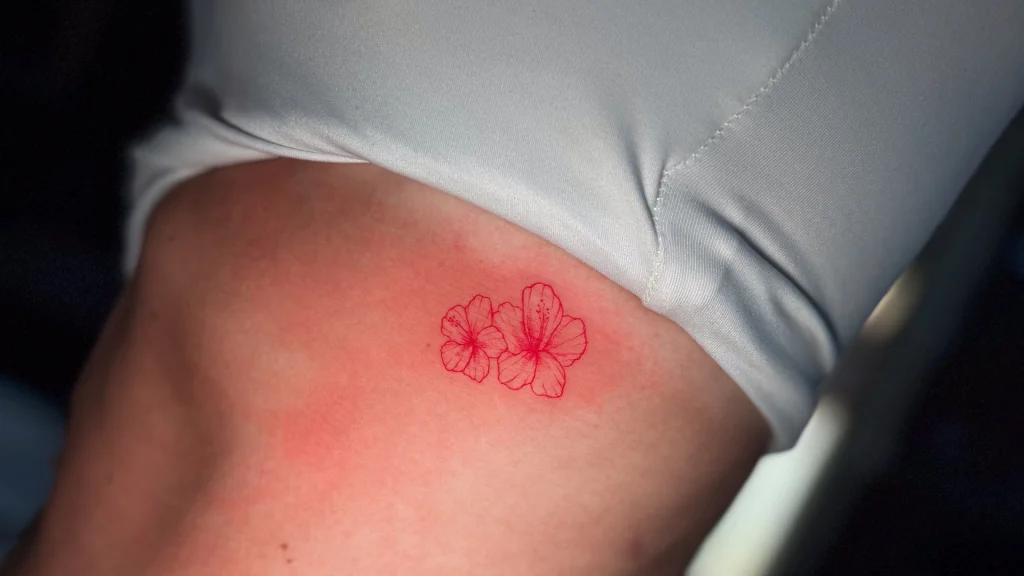
Yes, a wrinkly tattoo is usually a normal part of healing. It often appears after peeling, when fresh epidermis grows over the tattooed area. This new skin is still thin and soft, so it can look loose, wrinkled, or shiny before it firms up and smooths out.
The timing is a useful clue. Wrinkling often appears after the main peeling has finished, usually a couple of weeks into healing. The surface may look healed while deeper layers are still repairing, so some uneven texture can linger.
Most wrinkling settles gradually over the following weeks. However, the same appearance can have different causes, so look at what else is happening with the skin before deciding it is simply part of healing.
What makes a tattoo look wrinkly?
Wrinkly skin on a healing tattoo usually comes down to five common causes, and the fix depends entirely on which one you are dealing with:
1. New skin forming (the onion-skin stage)
The normal one. A thin, immature layer of skin has grown back over the ink and looks loose, shiny, and crinkly until it thickens.
Many clients call this onion skin, silver skin, or baby skin, or say the tattoo looks like it has a film over it. It settles on its own over a few weeks with light moisture. This is the version behind most "my tattoo looks wrinkly" worries, and it runs on the same clock as the rest of normal tattoo healing.
2. Too much moisture (maceration)
When healing skin stays wet too long it softens and wrinkles, the same way fingers prune in a long bath. On a tattoo this is called maceration. It comes from heavy ointment, trapped sweat, or soaking the area, and it looks soft, pale, and soggy, sometimes with scabs that lift early.
Macerated skin rubs open easily and heals unevenly. In Bali, sweat and sea water are the usual culprits, and when the soft patches turn into wet, swollen scabs, it has tipped into tattoo bubbling.
3. Too little moisture (dry, tight healing)
The opposite failure. Skin that dries out tightens and crinkles into fine creases and flakes. Aircon and direct sun pull moisture out of healing skin fast, which is why this one is common for anyone healing a tattoo in an air-conditioned villa or spending days outside.
It looks tight, dull, and flaky rather than soft and soggy. The fix is regular light moisture, covered in more detail with dry-skin healing.
4. Placement over a joint or crease
Tattoos on elbows, knees, knuckles, or the back of the hand fold every time you move, so the skin creases over the ink and can look wrinkly long after flat areas have smoothed out. This is mechanics, not a healing fault. These spots also sit under constant tension while healing, which is why they are more prone to cracking in the first week.
5. An older, healed tattoo that changed
Not a healing cause at all. A tattoo that healed smooth and only turns wrinkly years later is responding to skin that has loosened, not to anything that went wrong while it healed.
Quick reference: spotting the difference
Cause | What it looks like | When it happens | What to do |
New skin (onion skin) | Thin, shiny, loosely crinkled | After peeling, ~week 2–3 | Leave it, light moisture only |
Too wet (maceration) | Soft, pale, soggy, scabs lifting | Any point while wet | Dry it out, thinner aftercare |
Too dry | Tight, dull, flaky, fine creases | Any point while dry | Light moisturiser, apply more often |
Joint or crease | Creases when the area bends | During healing and after | Normal movement, do not pick |
Older healed tattoo | Soft folds following the skin | Months to years later | Skin change, not a healing issue |
How long does a wrinkly tattoo last?
Onion-skin wrinkling usually appears once peeling finishes, around the two-week mark, and settles over the following two to four weeks as the new skin thickens. The surface tends to look healed within two to three weeks, while the deeper layers keep rebuilding for a month or more. How long the wrinkling lasts also tracks your skin type, and tattoos over joints, large pieces, and heavily shaded areas take longer to look smooth.
A tattoo that is still wrinkly after a month with no other symptoms is usually dry rather than damaged. In that case it is asking for regular light moisturiser, not more time alone. Texture that comes with raised ridges or patchiness past that point is worth a closer look instead.
How to help a wrinkly tattoo settle
The fix depends on the cause you matched above, and getting it wrong makes things worse. The same habits also prevent the too-wet and too-dry versions from starting in the first place.
- Onion-skin stage: Leave it alone. A thin layer of light, fragrance-free moisturiser is all it needs while the skin matures.
- Soggy, macerated skin: Do the opposite. Dry the area out, skip the heavy ointment, let it breathe, and keep sweat and sea water off it until it firms up.
- Dry, tight skin: Moisturise lightly but more often, rather than drowning it in one thick coat.
- Over a joint: Normal movement is fine. The creasing is mechanical, so the only real rule is not to pick at the folds.
Through all of it, clean the area with plain bottled water rather than soap while it settles, which keeps Bali tap water and fragranced cleansers off healing skin.
When wrinkling comes with soft, soggy skin in a humid room, keeping the area dry can be more helpful than adding more cream. That is why Canggu Ink Club’s aftercare takes Bali’s heat, humidity, and sweat into account rather than relying on a thick-ointment routine.
If the texture is still there once the tattoo has fully peeled and settled, a quick look from the artist who did the work beats another week of guessing, and a free touch-up window (three months on their own pieces) exists for exactly the parts that settle unevenly.
When does a wrinkly tattoo need checking?
Wrinkling on its own is not a warning sign. What matters is what else is happening alongside it. Get the tattoo looked at when you see any of the following.
- Redness spreading outward beyond the tattoo after the first few days
- Pain increasing rather than easing after day three
- Heat in the area well past the first week
- Pus, as opposed to clear or slightly cloudy fluid
- Fever, chills, or feeling unwell
- Skin that is breaking open or weeping at week two
- Firm, raised texture that has not improved at all by three months
The first five are medical and need a doctor, not an artist. The last two are worth a conversation with your artist first, and the difference between a rough heal and a genuinely bad result is set out in what a badly healed tattoo looks like.
Why does an older tattoo look wrinkly?
An older tattoo looks wrinkly because the skin holding it has changed, not because the ink has moved. Collagen and elastin decline with age, the dermis thins, and sun exposure accelerates both. A design that once sat on firm skin now sits on looser skin, so it folds where the skin folds.
Weight change, pregnancy, and rapid muscle gain do the same thing faster. None of it is a healing fault and none of it is reversible with cream, though a rework or touch-up can restore definition.

Conclusion
A wrinkly tattoo is almost always new skin doing its job, not a ruined piece. Work out whether yours is the normal onion-skin stage, too wet, too dry, or simply sitting over a joint, because the first needs patience and the next two need opposite fixes. Read the skin before you treat it.
FAQ
Here are the questions that come up most often about wrinkly tattoos.
Cream can make healing skin look temporarily glossy, soft, or puckered. If it looks slick after moisturising, use a thin layer and let it absorb. More cream is not necessarily better.
Not usually. Wrinkling during peeling is often part of normal healing, while tattoo scarring leaves skin persistently raised, firm, thickened, or uneven. Raised or firm areas that remain after the tattoo has fully healed are worth having checked.
Yes. The area has spent several days sealed in a warm, moist environment, so the surface is softened and the new skin underneath is at its thinnest. Wash it, pat it dry, leave it bare for a while, and reassess once the skin has had air.
Not necessarily. Larger pieces, dense shading, and tattoos on the lower legs or feet often run past the usual four weeks. The question is whether it is still improving month on month, and whether the texture is soft or firm.
