
Tattoo Cracking After 3 Days: Normal Healing or a Problem?
Quick Summary
The short version before you start Googling infection photos at 2am.
- Tattoo cracking and pigment loss: Blood alone does not remove ink. Pigment is usually lost only if a scab comes off too early.
- Causes of tattoo cracking and bleeding: Movement, friction, moisture, sunburn, and heavily worked areas are the most common causes.
- Care for a cracked tattoo: Stop stretching the area, clean it once, and apply a thin layer of aftercare cream only after the bleeding stops and the tattoo is at least three days old.
- Signs requiring medical attention: Spreading redness, increasing pain, heat, coloured discharge, or feeling generally unwell.
A tattoo that has cracked and started bleeding is usually a scab that has split open under tension rather than an infection. The bleeding tells you the wound has reopened, but it does not automatically mean the ink underneath is gone.
What happens next depends on what actually split. Some cracks heal without leaving a trace. Others lift healing skin before it is ready and leave patchy areas that only become obvious weeks later. Knowing the difference changes what you should do in the next hour, the next few days, and whether you should expect a touch-up.
What does a cracked tattoo actually look like?
A cracked tattoo usually appears as a line where the healing surface has separated, most often across a bend or a heavily shaded area. The crack may be dry, damp, or bleeding depending on how deep it goes.
The artists at Canggu Ink Club make the distinction by looking at what comes out of the crack, not just how it looks. A dry flake releases nothing. A fissured scab may leak clear or straw-coloured fluid. A true split bleeds because the wound underneath has reopened.
What you have | Look and feel | What comes out | What it means |
Flake line | Pale, dry, one edge lifted, no real depth | Nothing | Normal shedding |
Fissured scab | Dark, looks deep, tender under light pressure | Clear or straw-coloured fluid | The scab has split, but the wound underneath remains sealed |
True split | Wet, sharp sting, edges pull apart when you move | Blood | The wound has reopened |
A flake line sits on top of sealed skin and usually needs nothing beyond normal aftercare. A fissured scab benefits from less movement and friction. A true split reaches the healing wound underneath and should be treated as a reopened wound.
One detail many people miss is the direction of the crack. Skin usually splits across the direction it stretches, not along the tattoo design. A crack across the inner elbow or around the ankle is more likely to be caused by repeated movement than by dry skin.
What should you do when a tattoo cracks and bleeds?
Stop the bleeding, clean it once, and then leave it alone.
The instinct is to do more. The right response is to do less, in the right order.
- Stop moving the area. Movement opened the split and continued movement keeps pulling it apart.
- Apply light pressure with a clean paper towel. Hold it for two to three minutes. Avoid tissues or cloth towels, which can leave fibres behind.
- Wash it once. Use clean hands and lukewarm water. Do not scrub or work soap directly into the split. Pat dry with a fresh paper towel.
- Leave it uncovered until the surface is dry. A bleeding wound does not benefit from being sealed under a dressing.
- Apply a very thin layer of aftercare cream only after the bleeding has stopped and the tattoo is at least three days old. Too much cream softens the scab, while none leaves it prone to cracking again.
- Remove the cause. Skip the beach, avoid unnecessary stretching, wear loose clothing, and postpone long scooter rides until the split has settled.
Watch it like a new wound
A tattoo that has been healing for eight days may feel almost healed. A crack that starts bleeding changes that. The skin barrier has reopened, so the next 48 hours matter more than the previous eight days.
Watch for redness spreading outward, increasing heat or pain, thick or coloured discharge, or feeling generally unwell. Those signs point to infection and should be assessed by a doctor rather than a tattoo artist.
If none of those happen, the next question is the one most people actually care about: did the crack cost you ink?
Is your tattoo ruined if it cracked and bled?
Usually not. Blood by itself rarely costs you pigment. It tells you the wound has reopened, but the ink sits deeper than the layer that just split. Pigment is usually lost only if a scab comes away before the skin underneath is ready.
So look at what came off, not at how much blood there was.
- Blood only, scab still attached: Almost certainly no pigment lost. Clean it and move on.
- A piece of scab came away and the skin underneath is pink and shiny: That is fresh surface skin. Normal. Protect it and wait.
- A piece of scab came away and the area looks pale or gappy against the linework around it: Pigment may have gone with it. You still cannot tell yet.
Pale patches often fill back in as the surface settles and clears. A tattoo that looks patchy after two weeks can look completely different by week four. Until the skin has fully healed, what looks like missing ink is often dried surface tissue rather than true pigment loss.
Judging ink loss before three to four weeks is mostly guesswork.
This causes a specific problem for travellers. You fly home on Saturday, the tattoo cracked on Tuesday, and you want it fixed before you go. Most studios in Bali, including Canggu Ink Club, will not touch up an area that has not finished healing, because tattooing over repairing skin produces a worse result than waiting and often creates the scarring people were trying to avoid.
The better option is to let the tattoo heal completely, photograph it after about four weeks, and send the images to your artist. Once the skin has settled, they can tell you whether you need a touch-up or whether the tattoo simply needed more time.

Why do tattoos crack while healing?
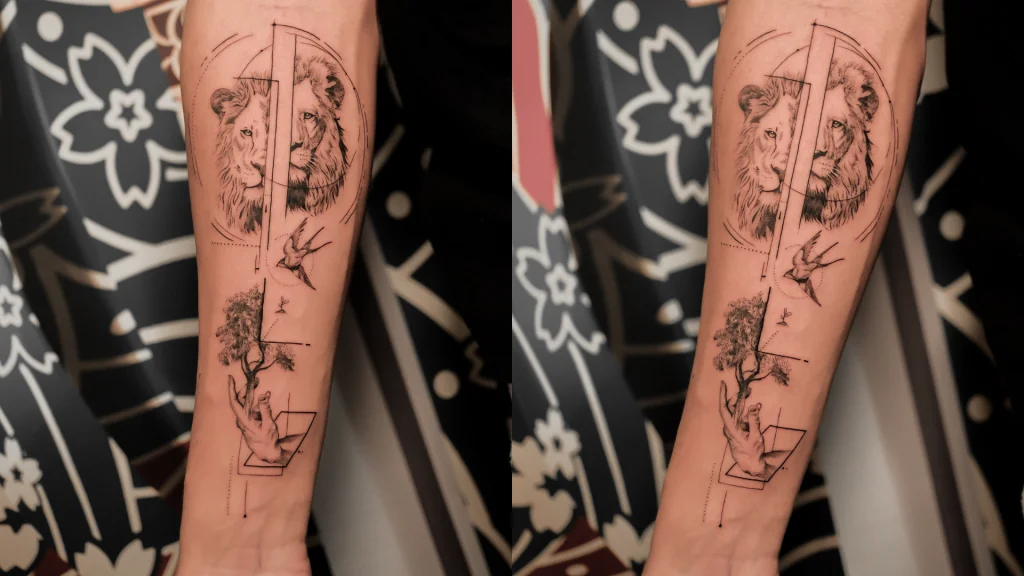
Tattoo cracking happens when a healing scab cannot stretch with the skin underneath it. As the tattoo moves through the peeling stage, the surface becomes firmer and less flexible. If it is bent, rubbed, or repeatedly softened and dried, it can split before the wound has fully healed.
The most common causes include:
Repeated movement
Joints like the elbow, wrist, knee, ankle, and fingers move constantly throughout the day. Every bend puts tension on the healing scab, making these areas the most likely to crack.
Friction
Tight clothing, waistbands, backpack straps, or shoes can rub against the tattoo and gradually weaken the scab until it splits.
Wet-to-dry cycles
Swimming, sweating, showering, and moving between Bali's heat and air conditioning repeatedly soften and dry the scab. Over time, it becomes less flexible and more likely to crack.
Sun exposure
UV exposure dries and tightens healing skin, increasing tension across the scab. This is especially common on larger shaded or blackwork tattoos.
Second skin lifting
If second skin lifts before the tattoo is ready, parts of the healing surface dry out faster than others. That uneven drying can make the scab split more easily.
Heavy shading or blackwork
Dense shading, colour packing, and blackwork often produce thicker scabs than fine line tattoos. Thicker scabs are naturally stiffer, making them more prone to cracking during normal movement.
The good news is that cracking does not usually mean something went wrong. Most tattoos crack because of everyday movement and heal normally with proper aftercare.
Why do tattoos crack in Bali?
People often assume humid weather should prevent cracking.
In reality, tattoos crack in Bali for different reasons than they might in a dry climate.
The combination of tropical heat, sweating, beach activities, scooter travel, and frequent transitions between hot outdoor air and cold air conditioning creates repeated stress on the healing skin.
Some of the most common situations include:
- Long scooter rides exposing the tattoo to warm wind, vibration, and dust.
- Beach days where saltwater, sunshine, and drying sea breeze repeatedly soften and dry the healing skin.
- Pool water followed by direct sun.
- Hiking or gym sessions that create constant stretching and heavy sweating.
- Tight clothing staying damp for hours in humid weather.
Humidity does not stop a tattoo from cracking.
It simply changes why it cracks.
Most cracks still happen because the healing skin is repeatedly stretched, rubbed, or forced through wet-to-dry cycles before it has regained its strength.

When is it normal for a tattoo to crack during healing?
Tattoo cracking is usually normal between days 3 and 10 of healing, when the scab is at its driest and least flexible. Cracking during this stage is common, especially on joints and heavily shaded tattoos. Cracking after the tattoo has fully healed is not normal and should be assessed.
Healing stage | What tattoo cracking usually means |
Days 1–2 | Uncommon. Early cracking is usually caused by excessive movement, accidental trauma, or a heavily worked tattoo. |
Days 3–5 | The most common time for cracking. The scab tightens as peeling begins and may split over areas that bend or stretch. |
Days 6–10 | Still normal. Cracks often appear on the elbows, knees, wrists, ankles, fingers, and heavily shaded tattoos before peeling finishes. |
Weeks 2–3 | Less common. New cracks usually mean the tattoo is still being stretched, rubbed, or picked at. |
After four weeks | Not normal. A healed tattoo should no longer crack. New cracks may indicate skin irritation, injury, or another skin condition rather than the tattoo healing itself. |
Is a cracked, bleeding tattoo infected?
Cracking and bleeding on their own are mechanical, not infectious. An infection looks and behaves differently, and the difference is mostly about direction of travel.
Normal healing gets better each day. Infection gets worse each day. That single test resolves most cases.
Signs it is mechanical:
- Blood appears only when the area is stretched, knocked or dried out
- The bleeding is a bead or a thin line, and it stops within a minute
- Redness stays inside the tattooed outline
- Pain is fading, not building
Signs you need a doctor today:
- Redness spreading outward beyond the tattoo, especially in streaks
- Pain that increases after day three instead of decreasing
- Skin hot to the touch well past the first 48 hours
- Thick yellow or green pus, as opposed to clear or straw-coloured fluid
- Fever, chills, swollen lymph nodes near the tattoo
- Any bad smell
Clear fluid weeping from a fresh crack is plasma and is expected. Pus is opaque, thick and does not look like water. Anyone confident they cannot tell the two apart should send a photo to their artist rather than to a Facebook group.
One more distinction worth holding. An itchy, raised, bumpy reaction appearing at the same time is more likely irritation from a product than an infection. Different problem, different fix, and the normal versus concerning scabbing comparison sets out where each one sits.
Which tattoos are most likely to crack?
Some tattoos are more likely to crack than others because of where they are, how much they move, and how heavily they were tattooed. Areas that bend constantly, rub against clothing, or develop thicker scabs during healing are the most prone to splitting.
Risk factor | Examples | Why it cracks |
High flexion | Inner elbow, back of knee, fingers, knuckles, wrist, ankle | The skin stretches and folds dozens of times a day, putting constant tension on the healing scab. |
Thin skin over bone | Ribs, shins, spine, collarbone, top of foot | Less cushioning means more strain reaches the healing surface with every movement. |
Constant friction | Waistband, bra line, inner thigh, feet in shoes, shoulder under a bag strap | Clothing and repeated rubbing weaken the scab, making it more likely to lift or split. |
Heavy ink density | Blackwork, colour packing, dense shading | More trauma during tattooing creates a thicker, stiffer scab with less flexibility. |
Lower-risk areas | Outer forearm, outer thigh, upper back, calf | Flatter skin with less movement and friction allows the scab to stay intact more easily. |
None of these factors guarantees a tattoo will crack, and low-risk placements can still split if they are stretched, rubbed, or knocked during healing. They simply tolerate movement better than areas over joints or high-friction skin.
If your tattoo is on a high-movement placement, expect healing to require a little more protection. Limiting friction and repeated stretching during the scab phase does more to prevent cracking than applying extra moisturiser.
Conclusion
A cracked tattoo that bled is a reopened wound, not a ruined tattoo. Clean it once, stop whatever caused the split, and give the skin a chance to finish the job it had already started. Watch it closely for the next 48 hours, then wait a full month before deciding whether the tattoo needs a touch-up.
FAQ
Worried about a cracked or bleeding tattoo? Here are answers to the questions artists hear most often during the healing process.
It depends on the cause. Cracking that comes from normal scab movement usually settles as the scab phase ends, commonly within one to two weeks. Cracking that keeps returning is not running on a timeline, it is running on a cause, and it will continue until the friction, sun exposure, or moisture cycling stops.
Yes, but only lightly and only once any bleeding has stopped. A very thin layer keeps the surrounding scab flexible enough that the split does not spread further. Heavy application makes it worse by softening the scab until it lifts early.
Sometimes. Light cracking across a joint or a heavily shaded area is common while the scab is at its stiffest, usually somewhere between day four and day ten. Splits that bleed repeatedly, spread, or appear alongside worsening redness are not normal and need looking at.
No. A closed split is newer and thinner than the skin around it, and it is the first place pool chemicals or ocean bacteria will find a way in. Stay out of the water until the whole tattoo has finished peeling, not just until the crack looks sealed.
Usually not. A single split that is cleaned and left alone heals flat in most cases. Scarring becomes more likely when the same area splits repeatedly, gets picked at, or becomes infected, which is why stopping the cause matters more than treating the crack.
